Rules of Golf: Beginner's Guide
Learn the fundamentals of golf with structured, easy-to-follow chapters
Chapter 13
Golf Course Setup & Types of Courses
Understanding the layout and structure of a golf course helps you navigate, strategize, and appreciate the game better.
What a Full Golf Facility Includes
A complete golf facility typically includes several key components:
🏢 Reception / Clubhouse
Check-in area where you book tee times, pay green fees, rent clubs, and access amenities like locker rooms and pro shop.
⛳ Putting Green
Practice area for putting. Often has multiple holes to simulate different lengths and breaks.
🎯 Chipping Green
Area for practicing short shots around the green with wedges. May include practice bunkers.
🏌️ Driving Range
Area for practicing full swings with all clubs. Distance markers help gauge how far you hit.
⛳ Golf Holes (The Course)
The main playing area consisting of 18 holes (or 9 holes at smaller facilities). Each hole has unique features covered in Chapter 1.
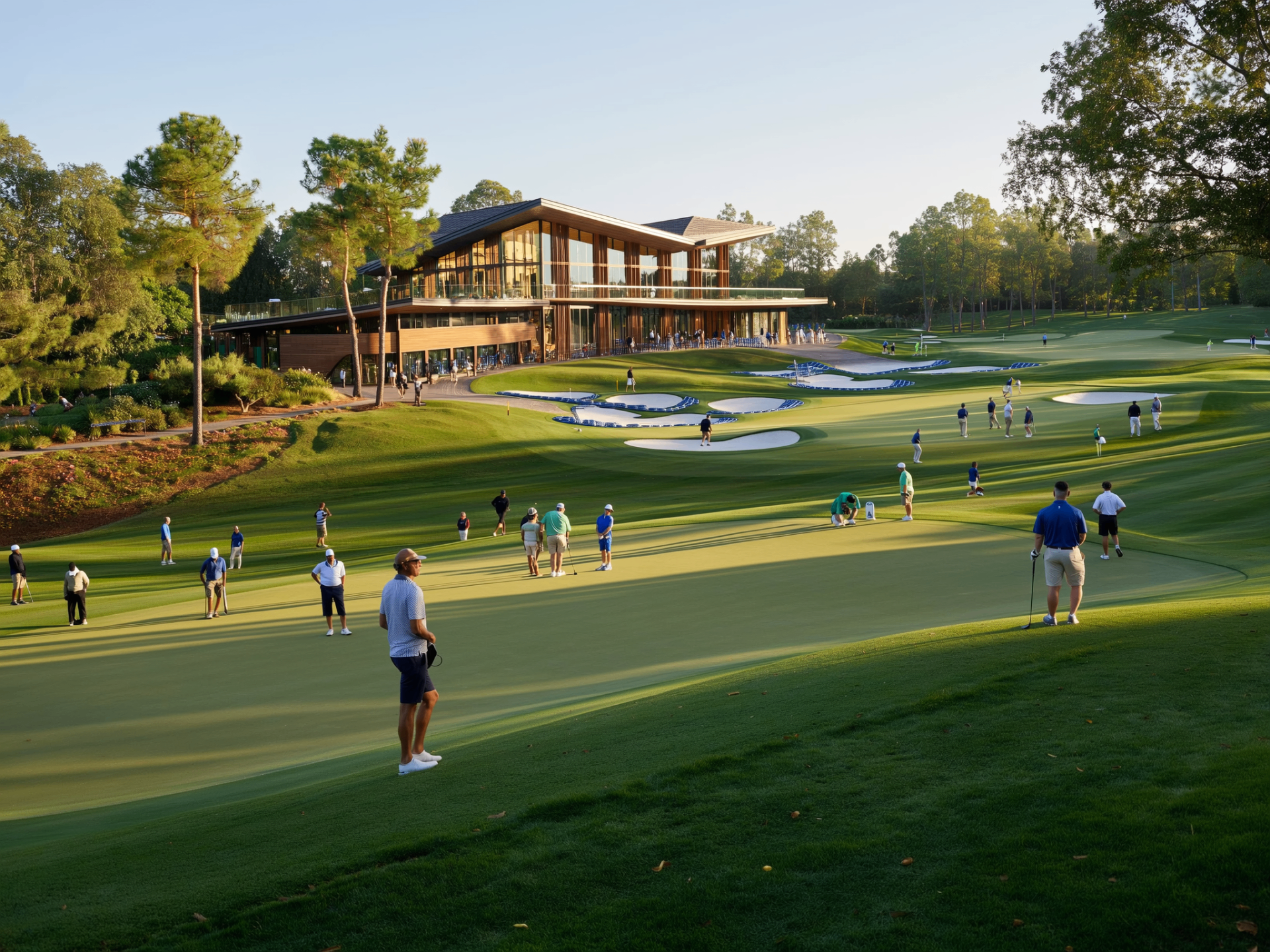
A modern golf facility with clubhouse and practice areas
Types of Golf Courses
Golf courses vary greatly based on terrain, location, and design philosophy:
🌊 Links
Traditional seaside courses with natural terrain, minimal trees, deep bunkers, and fast, firm conditions. Wind is a major factor. Examples: St. Andrews (Scotland), Royal Birkdale (England).
🌳 Parkland
Inland courses with tree-lined fairways, lush grass, and water features. More forgiving and scenic. Most common type worldwide.
🏜️ Desert
Built in arid climates with sand, rocks, cacti, and minimal grass. Dramatic landscapes with severe penalties for wayward shots.
🌿 Heathland
Natural terrain with heather, gorse, sandy soil, and rolling land. Mix of links and parkland characteristics.
🏖️ Resort Courses
Designed for vacation golfers. Often scenic, well-maintained, and more forgiving. Emphasis on enjoyment over difficulty.
🎯 Executive / Par-3 Courses
Shorter courses with mostly par-3 holes. Great for beginners, practice, or quick rounds. Less intimidating than full-length courses.
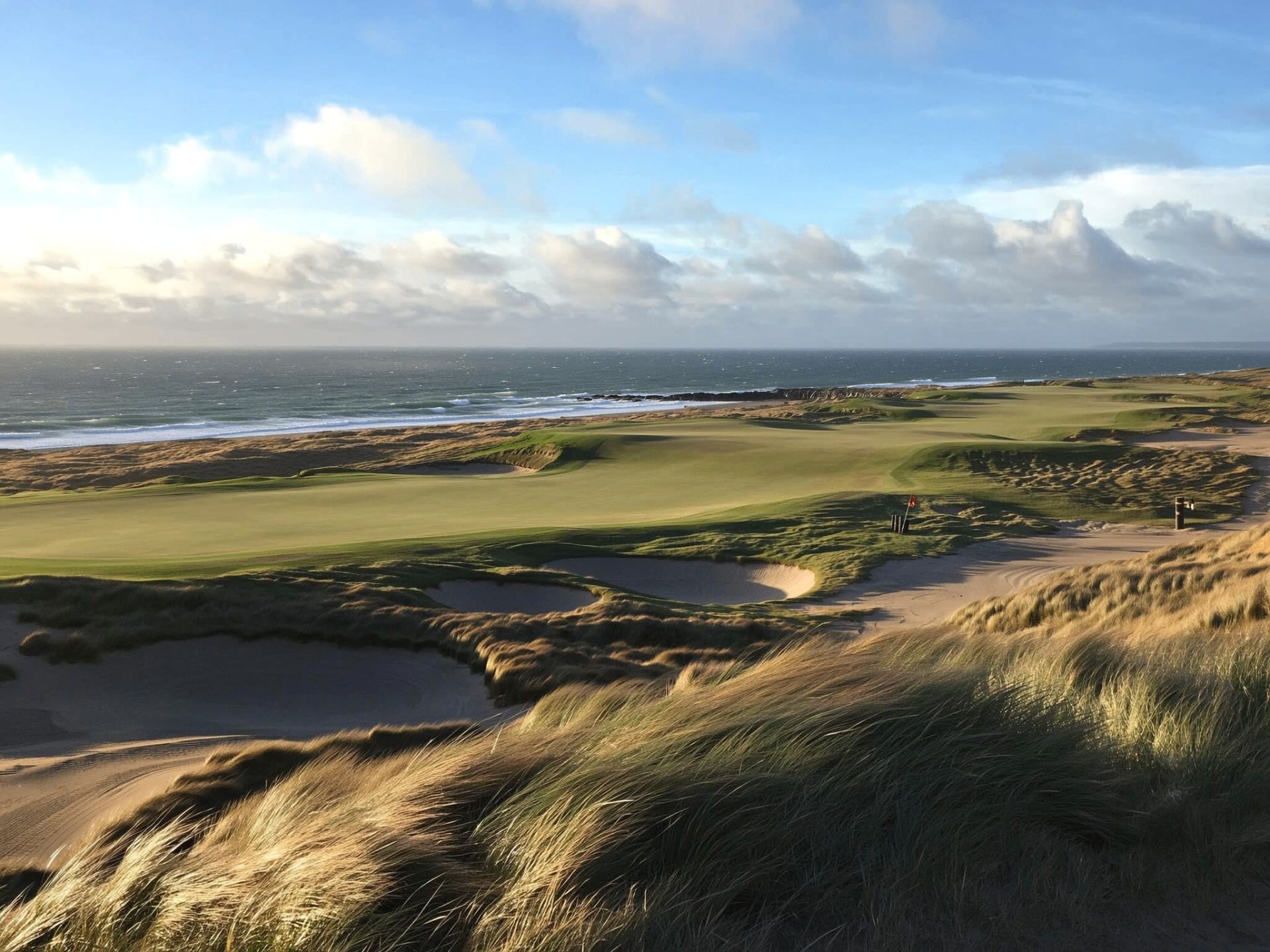
Links Course
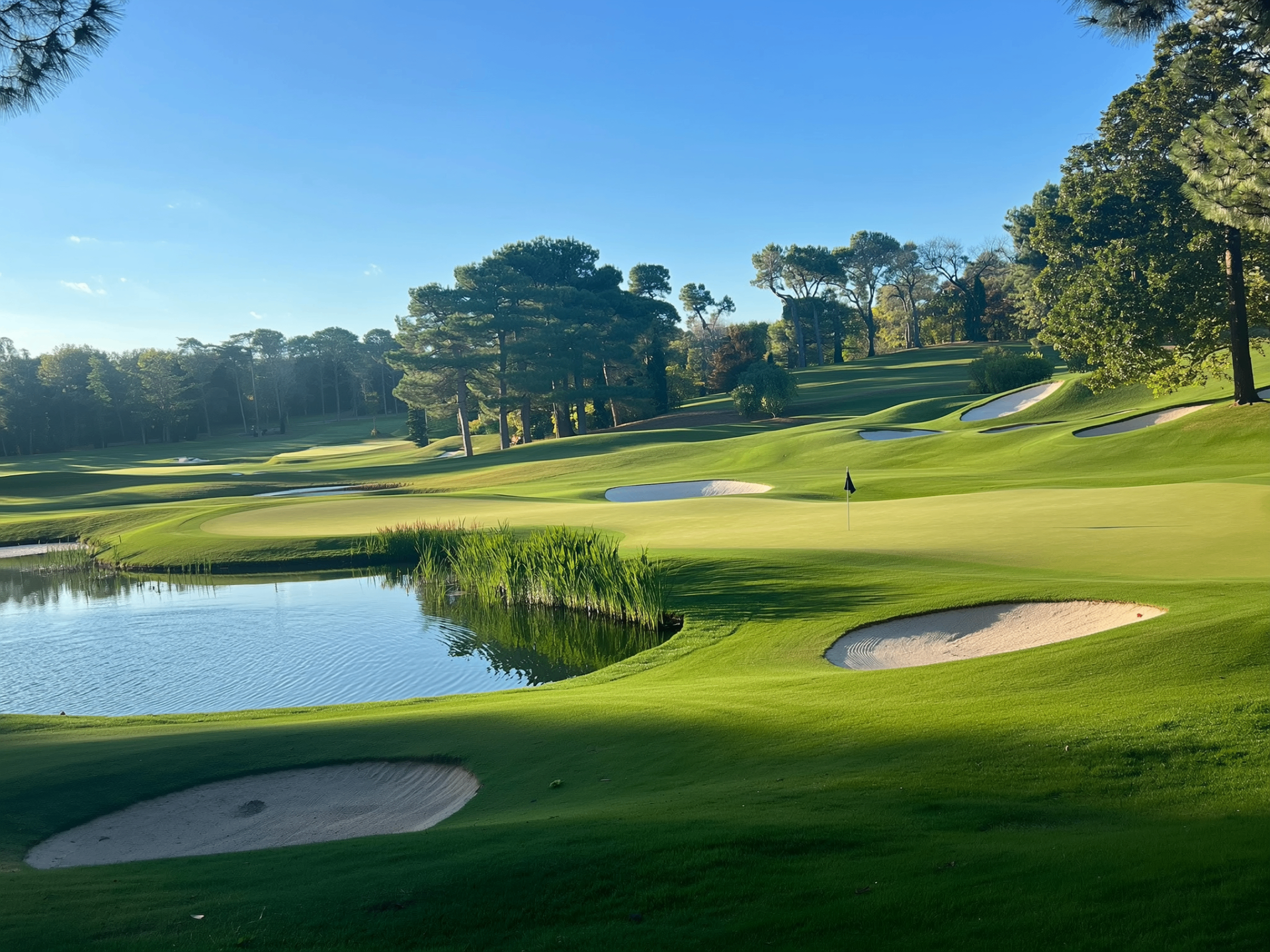
Parkland Course
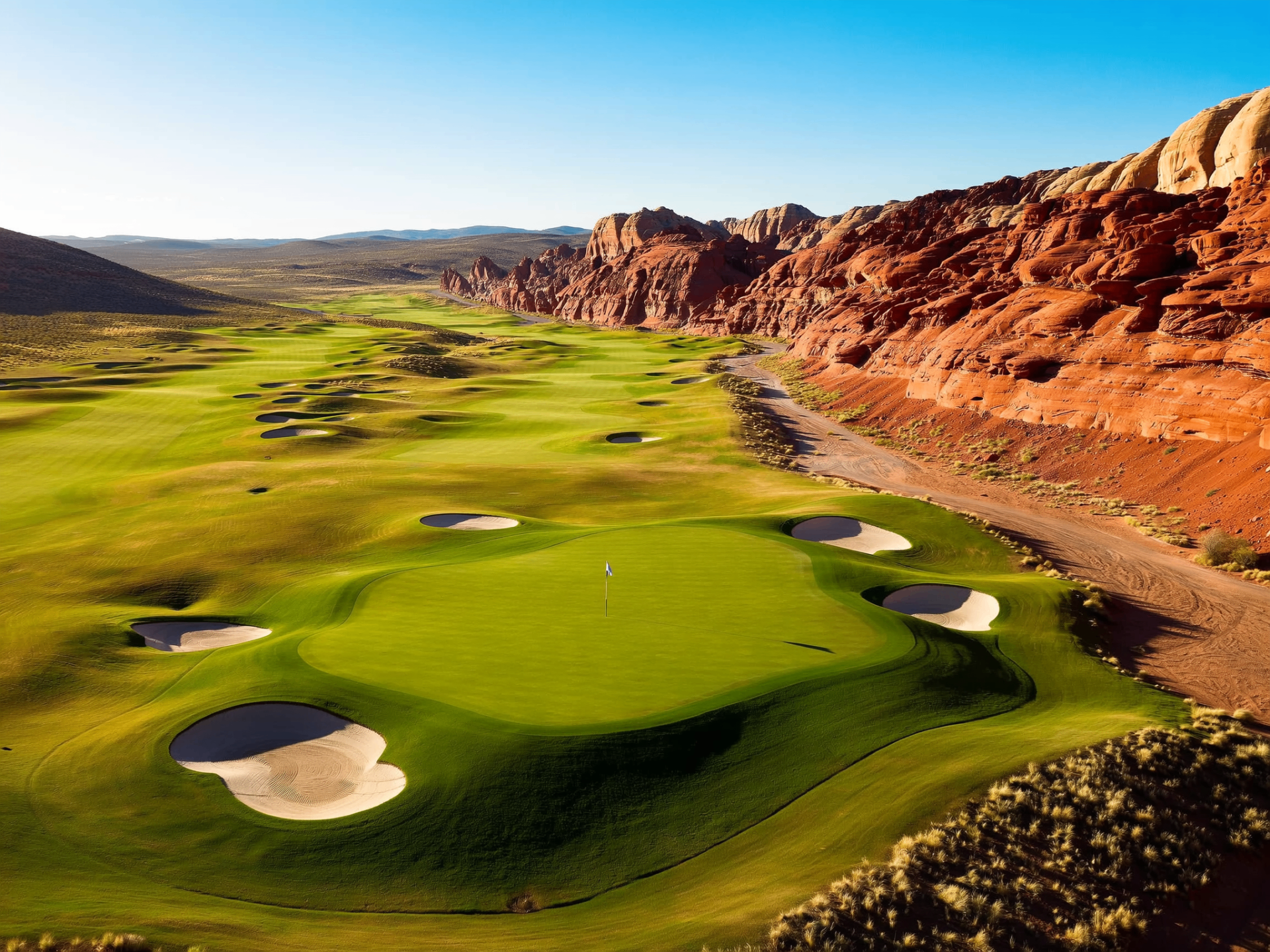
Desert Course
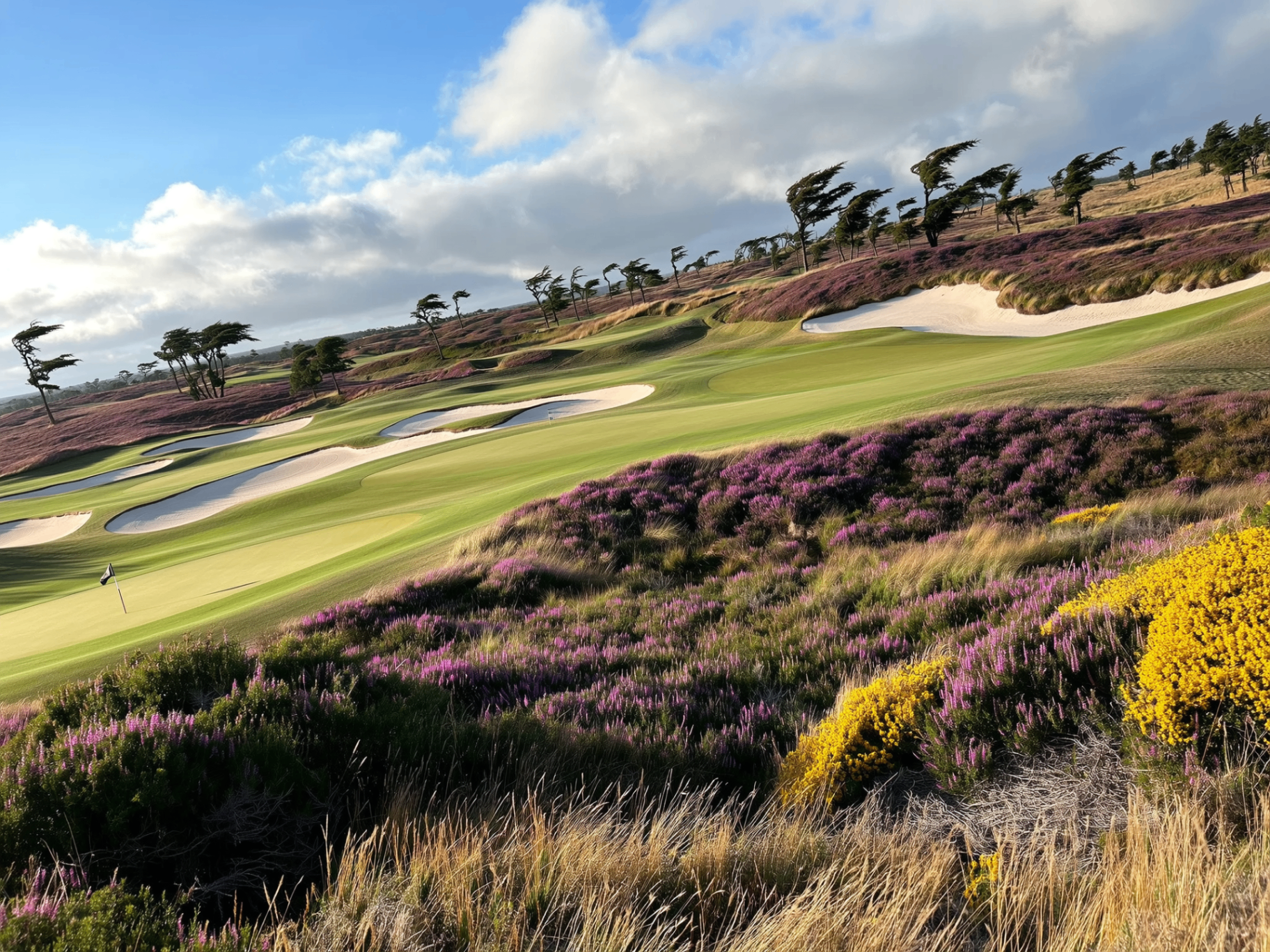
Heathland Course
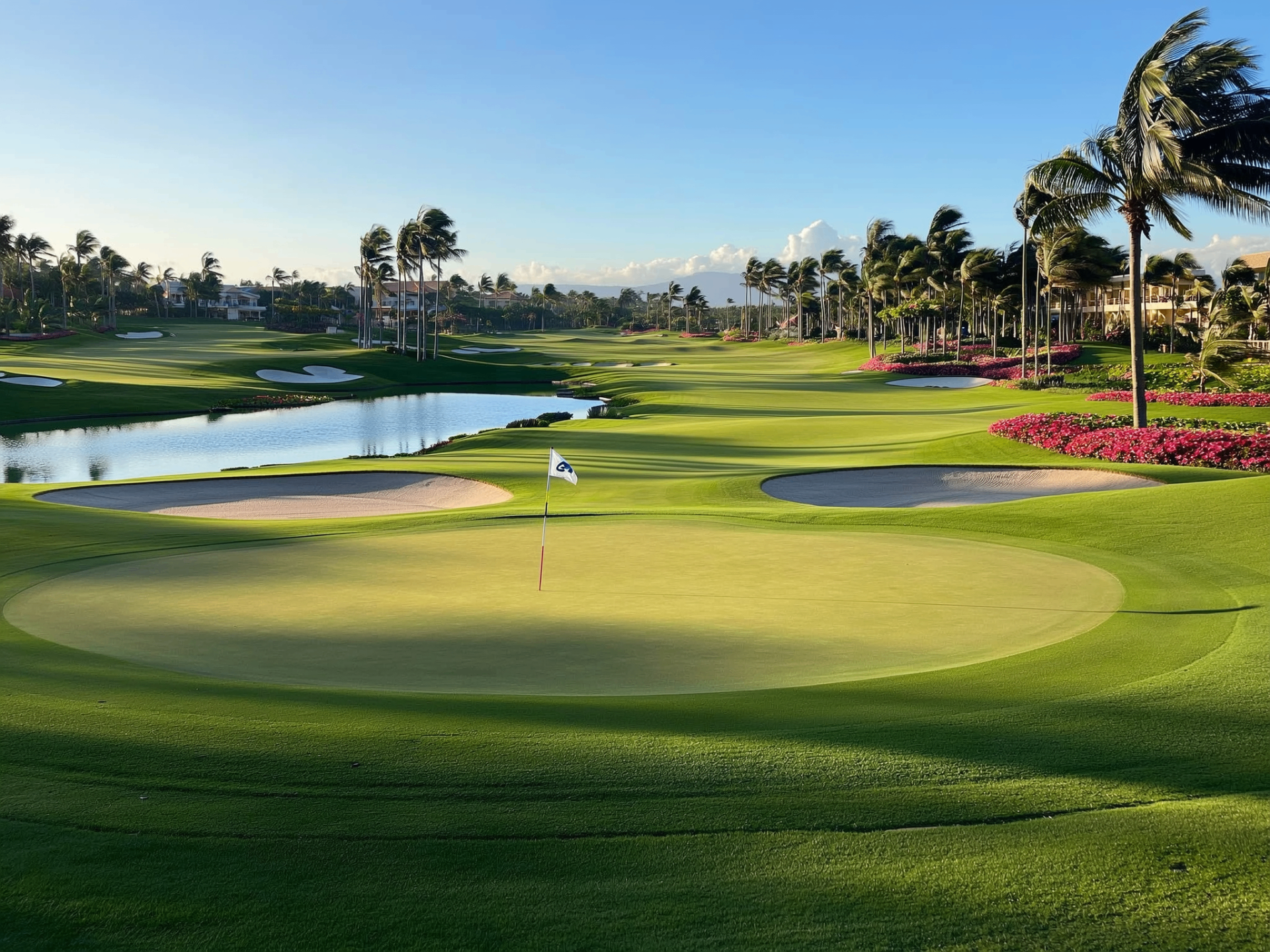
Resort Course
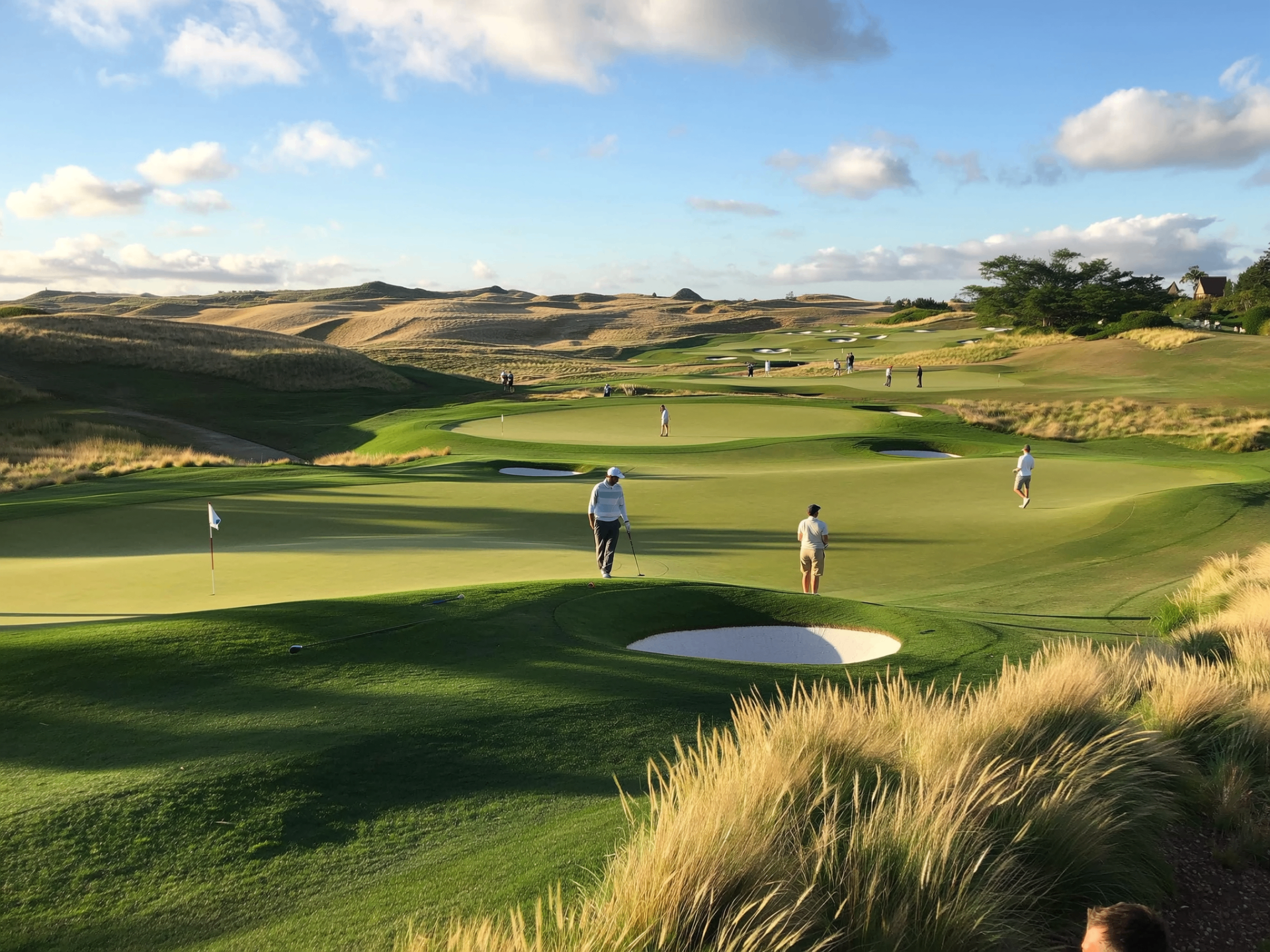
Executive / Par-3 Course
Course Setup Terminology
Front Nine / Back Nine
18-hole courses are divided into two halves: holes 1-9 (front nine) and holes 10-18 (back nine).
Par Values
Expected number of strokes for each hole. Most courses are Par 72 (mix of Par 3s, 4s, and 5s).
Yardage Markers
Signs or posts showing distance to the green center (e.g., 150m, 100m markers). Help you choose the right club.
Tee Colors
Tee colors differ between clubs.
- Red: Closest tees, usually for women or beginners
- Blue: Junior or senior tees
- Yellow: Standard men's tees
How Course Difficulty Is Measured
Course Rating
Expected score for a scratch golfer (0 handicap). E.g., a course with a rating of 72.5 is slightly harder than Par 72.
Slope Rating
Measures difficulty for average golfers (bogey golfers). Scale from 55 (easiest) to 155 (hardest). Standard is 113.
Why it matters: Course Rating and Slope Rating are used to calculate your Course Handicap. Harder courses give you more strokes.
Test Requirement: You need to score at least 80% (4 of 5) to complete this chapter.
Each test has 5 questions. Pass with 80% or higher to mark the chapter as complete.